
Temperature Sensors & Transmitters
HSM-FO Fluorescent Fibre-Optic Temperature Sensor
Dielectric, HV-rated
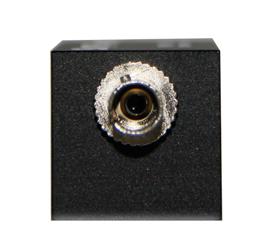
HSM-FO technical data
Measurement
- Measuring range
- −40 to +200 °C (higher ranges to order)
- Accuracy
- ±1 °C (higher accuracy on request)
- Resolution
- 0.1 °C
- Channels
- 1–16
- Update period
- 300 ms
Electrical
- Supply voltage
- DC 5 V
- Output
- USART serial; unique address required per unit on a shared bus
- Baud rate
- 9600
Mechanical
- Sensor type
- Quartz optical fibre, 5 m standard
- Minimum tip diameter
- 600 µm
- Withstand voltage
- 100 kV AC at 50 Hz for 5 min, 0.4 m lead to earth
Values are for the standard configuration. Ranges, threads, probe lengths and output types outside this table are available on request — the datasheet revision for a custom build is issued with the quotation.
Request the PDF datasheet →Temperature Sensors & Transmitters
HSM-FOFluorescent Fibre-Optic Temperature Sensor
Dielectric, HV-rated
Fluorescent-decay temperature sensing on a quartz fibre, with no electrical path to the measurement point. −40 to +200 °C (to 300 °C on request), ±1 °C, 0.1 °C resolution, USART output, immune to electromagnetic fields and rated for 100 kV at the lead.
Engineering reply · Evaluation samples available · Custom ranges built to order
- Zero electrical connection to the measurement point
- Immune to electromagnetic interference
- Withstands 100 kV at the fibre lead (0.4 m, 5 min)
- Sensing tip as small as 600 µm
- ±1 °C accuracy, 0.1 °C resolution
How it works
A fluorescent material at the fibre tip is excited by a light pulse; how quickly its glow decays depends on temperature, and the decay is timed optically. There is no electrical connection between the sensing tip and the instrument — no thermocouple, no RTD lead, no metal path. That is the whole point: at 100 kV, a metal probe in a transformer winding is a liability, while a quartz fibre is not. The same property makes the sensor immune to electromagnetic interference, immune to chemical attack, and small enough to place in a winding hot spot or a switchgear contact.
Typical applications
- Transformer winding hot-spot measurement
- Switchgear and breaker contact temperature
- High-voltage cable joint monitoring
- Photovoltaic and inverter hotspot detection
- MRI and other strong-field environments
Not certain HSM-FO is the right unit?
Send the medium, range, process connection and the signal your control system accepts. We will confirm the model — or tell you which one fits better — before you commit to an order.
Same family
Other temperature instruments
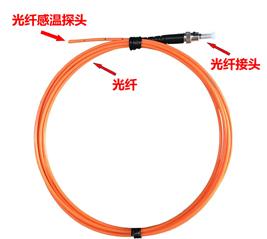
Fluorescent Fibre-Optic Probe
ST connector
Replacement or additional fibre probe for the fluorescent system: ST connector, quartz fibre with PTFE jacket, rare-earth sensing tip, 3 mm overall diameter, rated to 200 °C. Bend radius 13.2 cm long-term, 4.4 cm short-term.
View specifications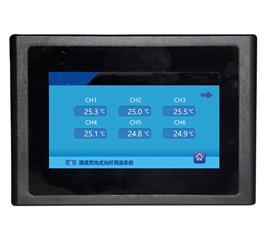
Fluorescent Fibre-Optic Temperature System
Multi-channel, 1–32
Complete multi-channel fibre-optic temperature system: 1–32 channels, −40 to +200 °C (300 °C on request), ±1 °C, ±0.1 °C resolution, RS485 Modbus RTU, 100–300 V AC supply, 2.3 mm probes rated for 100 kV.
View specifications Illustrative image
RTD Temperature Probe
Pt100 / Pt1000
Bare Pt100 or Pt1000 probe in a stainless sheath with a standard terminal head. −200 to +600 °C, resistance signal straight out, probe length and diameter made to order. The element to specify when the transmitter lives in the panel, not on the pipe.
View specifications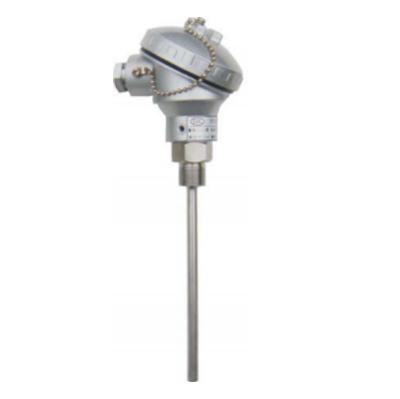
Integrated Temperature Transmitter
4–20 mA, 2-wire
Pt100 probe with an integrated transmitter in the head, giving a two-wire 4–20 mA signal directly from the sensor. −200 to +600 °C, 0.1 or 0.2 accuracy class, epoxy-potted and intrinsically safe module, IP65.
View specifications